Panorama 1240x201
Disclaimer

Resolution: 1280 x 1024

Hannes90

Update: 28 Jul 2010

deutschlandfahne

German

Stern 80x73 - 10
edrn


*


*


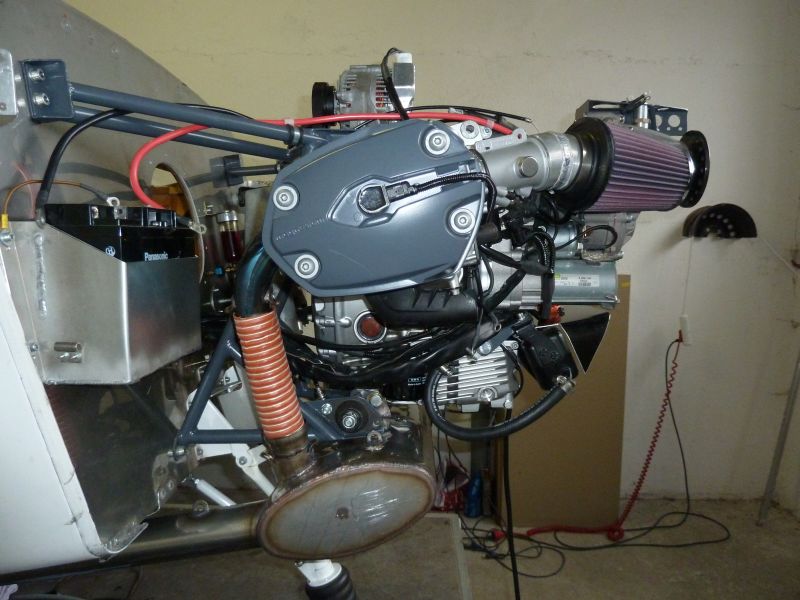
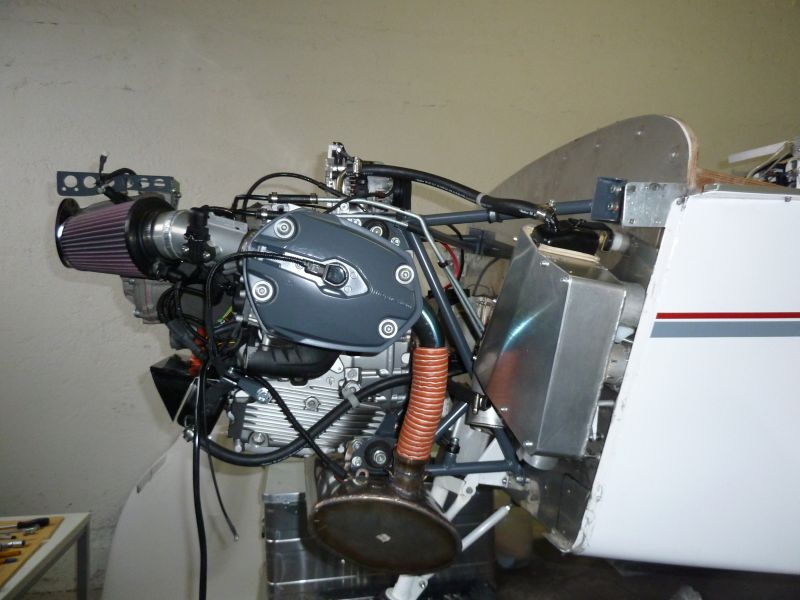
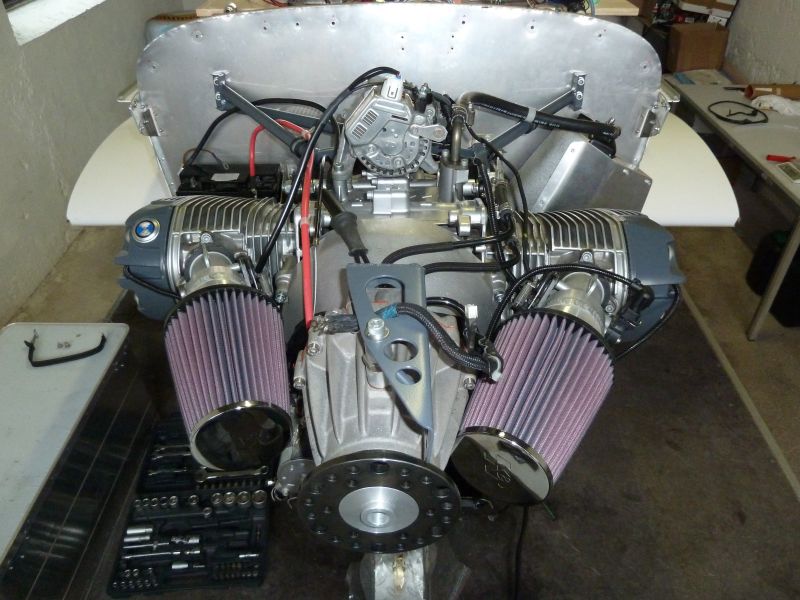
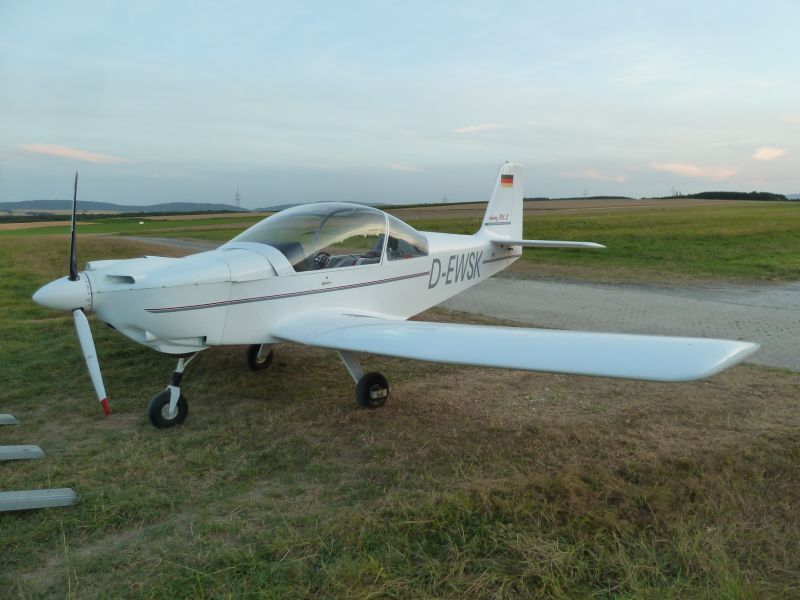
My choice is the BMW R1100S motorcycle engine.


Content:

- General Information
- Fuel system
- Air filter
- Exhaust system
- Heating
- Wiring
- Engine cooling
- Gear

- Experience


General Information

Some details need to be considered in order to gain 72 KW (98 hp) from the BMW R1100S.  Experienced Dutch BMW Cherry flyers (Renny de Leeuw and Bart Kroes) as well as the official BMW-Engine retailer Wilfried Bleidiesel sent me some very valuable tips for the installation.
Thanks a lot!!!
Renny wrote a very interesting article for an American magazine once -see pdf file-.

I will provide important details and my own experience on this page. First of all some technical data regarding this installation.

BMW R1100S engine and Hirth G40 gear

Type

Air- (40%) / Oil- (60%) cooled four stroke opposed-twin engine Cam in head, four valves per cylinder

Bore x Stroke

99 mm x 70,5 mm

Displacement

1085 ccm

Power

72 KW (98 bhp) @ 7500 min-1

Max. Torque

97 Nm (70 lb-ft) @ 5750 min-1

Compression Ratio

11.3 : 1

Fuel System
&
Engine Management

Electronic fuel-injection, electronic ignition, digital engine
management, Bosch Motronic MA 2,4
(since 12/2002 dual ignition system)

Fuel Consumption

approx. 11 litres (3 Gal) per Hour (@ 75 %)

Gear Reduction

2.96 : 1   Hirth G40

Weight

ca. 80 Kg (176 lb) -ready incl. gear, oil ...


All major advantages of the BMW Engine are obvious:

    - No carburetor-icing (Electronic fuel injection)
    - No mixture-regulation
    - Premium Unleaded (95 ROZ)
    - Extremely low fuel consumption
    - Very high power-/weight-ratio
    - 3 - way catalytic converter (closed loop) can be used
    - Significantly less expensive than a certified engine
       ...


I bought a pre owned BMW R1100S on ebay and kept the engine as well as all parts I need for the Cherry (Fuel-pump,
Oil-cooler, Harness...). I sold all remaining parts (Frame, wheels, gear...) online. Finally the BMW engine was less than $ 1000. And an additional $ 2000 for the gear including rotational oscillation dampener and automatic centrifugal clutch (the propeller starts turning @ 2700 min-1 - there will be no harmful low rpm vibration to the plane at all-).

 In order to reach maximum performance I am committed to keep all original technical details from the BMW motorcycle.


Overview:


Assembling of the Engine compartment


Fuel system

First of all I kept the fuel-system (Pump, filter and strainer) from the motorcycle. This unit is mounted on a flange
and located inside the fuel-tank (just as on the BMW R1100S).


The fuel manifold is taken from the motorcycle as well. This way the pressure valve is located
close to the fuel injection valves in order to avoid pressure losses.


Fuel lines
 

Air Filter

Renny and Bart emphasized the importance of the air-filter-housing volume and the design of the exhaust system
in order to reach a good engine performance.

 I compared the air filter housing of the motorcycle and a purchased model for planes.


BMW R1100S air-filter-housing 7 liters      Purchased model 4.5 liters


Measuring 11 Liters, I built the ultimate size (10 times the engine displacement).
I did not calculate the volume, but measure it by water displacement.


Air-filter-housing with original BMW filter

Another BMW-detail are the inlet ducts. They are shaped like a trumped with a decreasing diameter towards
the throttle-valve. It fits perfectly to the throttle valve allowing a smooth air flow.


Filter Housing with original BMW inlet ducts (black)


Side view

Since the air-filter-system is installed similar to the BMW motorcycle, I do not expect any negative influence to the performance from this system.

Exhaust system

Well, the motorcycle-muffler is the only system that does not fit on the plane. This is going to be a “try and error” task.

 The German Motorrad magazine performed an interesting test on mufflers in 04/2002 (source: www.s-boxer.de -German language -). They tested 8 different after-market (tuning) mufflers for the R1100S. Even though those manufacturers make a living with their products and many promised an increased performance, the test results were crushing. 7 out of 8 expensive tuning mufflers actually decreased the performance. Only one System (AC Schnitzer Grand Prix) had a similar performance than the original BMW muffler. By the way: The tested series R1100S had 101 bhp and 100 Nm torque with the original BMW exhaust system.

 This result leads me to the conclusion; “It will be difficult to reach the performance of the original BMW exhaust system”.
On the other hand, the Staintune system –without the primary pod- (this system was installed on my BMW) still reached 99 bhp and 96 Nm. None of the tested systems resulted in a significant loss of power. I guess those systems are just not worth the money.

 Though, I need a good build to fit exhaust system for my Cherry!!!

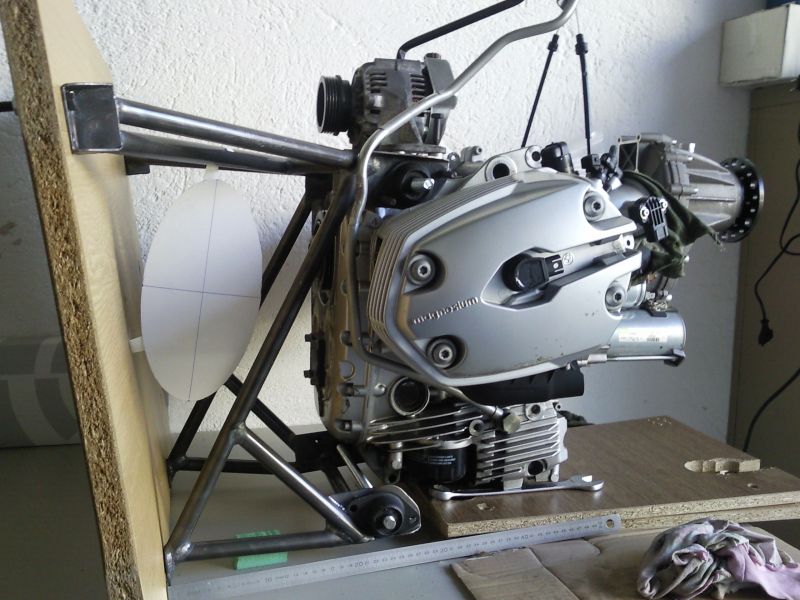
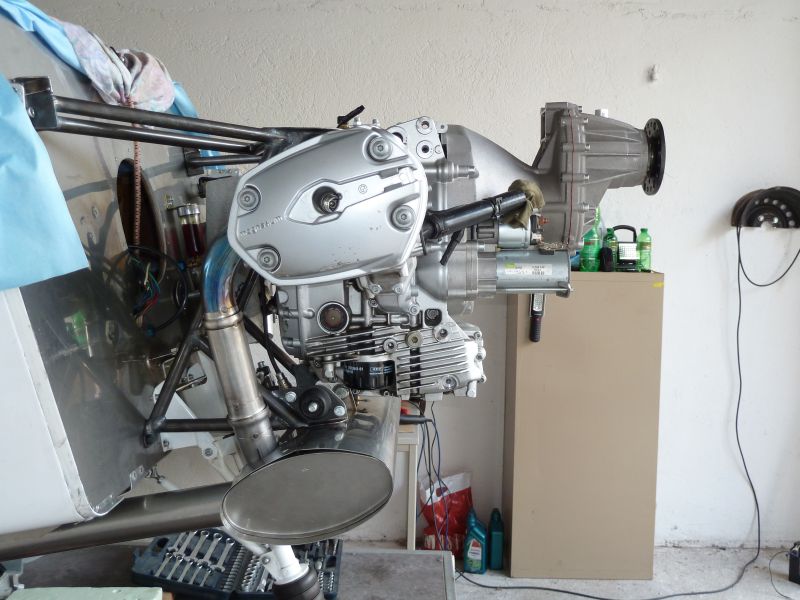
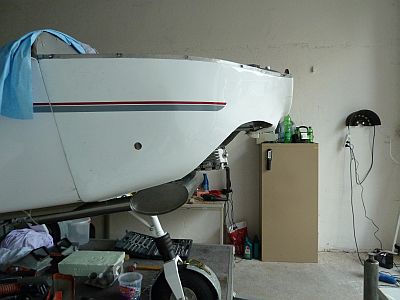
Despite the risk of perhaps reconstructing the system later on, I decided to install a minimum of exhaust tubing underneath my cowling.


Both pipes merge quite early


The 75 mm (3”) elbows will serve as a kind of first stage pod


I discovered a promising story about a "Swiss muffler" in Toni Bingelis book "Firewall Forward"
and decided on building this "long" noise canceling pipe.


Some guys tried to talk me out of this idea, because the fiber glass insulation is expected to disintegrate pretty fast.
Well, nowadays I could improve the endurance using a heat resistant woven ceramics fiber hose with some ceramic-wool...


Building this 1.3 m long pipe was quite an effort. However, in my case it did not proof to be worth it  -
may be the woven ceramic hose isn't absorbing enough noise...
Considering the size, this silencer is too noisy - and once again I gained some experience.


Finally, I found a slightly scratched silencer from a Suzuki 1300 for $ 25 at a parts sale that works just great.
Should have started with this one...


Note from ground-testing:
Meanwhile, I measured more than 100 hp with this system. Quite enough power...


Heating

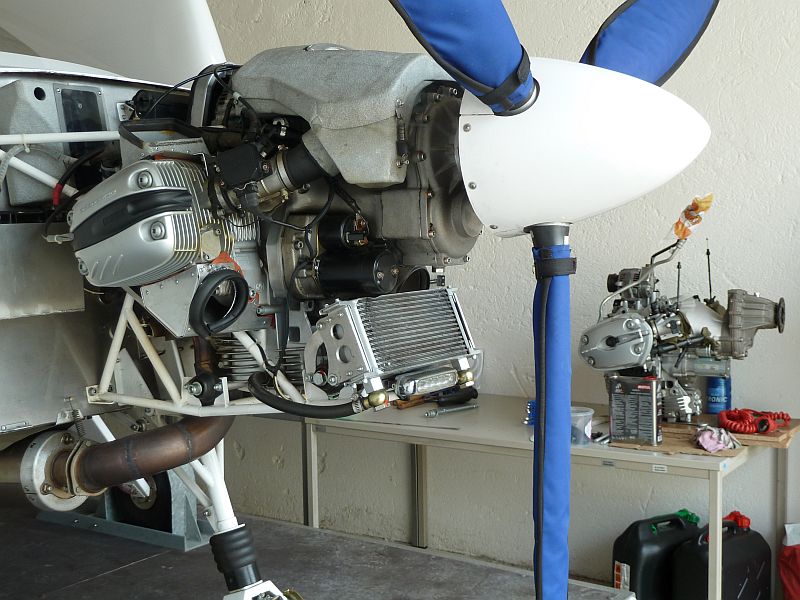
 I am not going to use the hot exhaust pipes for heating the cockpit. I installed a second oil-cooler for this purpose.

Andreas from Switzerland made good experience heating his Breezer cockpit this way. Another advantage of this solution is an increased cooling capacity. The BMW has a second oil pump (cooling-oil-pump) installed to circulate the thermostat controlled oil-cooling-system.


Second radiator and air distribution system. Whether heating is needed or not the radiator will have a  constant air flow anyway.


Wiring

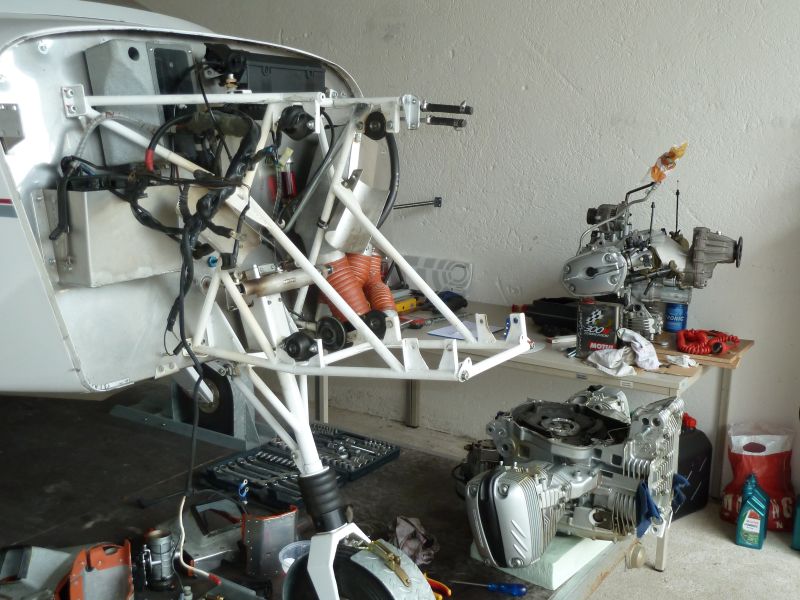
First of all the excerpt of my efforts:

Purchasing a special harness for the plane is for sure a better solution.


But, since I already have the R1100S harness...


After an intensive surgery I removed this bunch of wires (not need for the plane).
It is amazing how much wiring I found hidden in the motorcycle.


I used one of the two rubber-mounted BMW relay- and distribution-boxes (center).
The sensitive hall-sensor-plug found a nice place inside as well.


Engine cooling


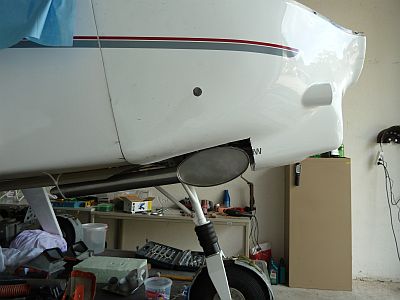
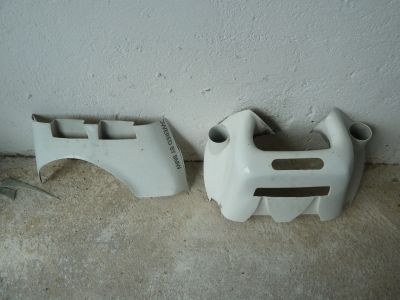
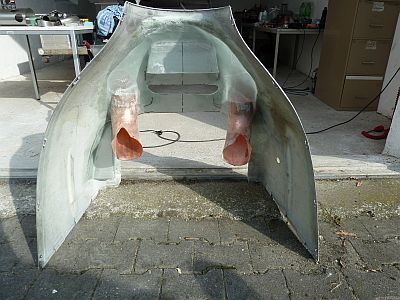
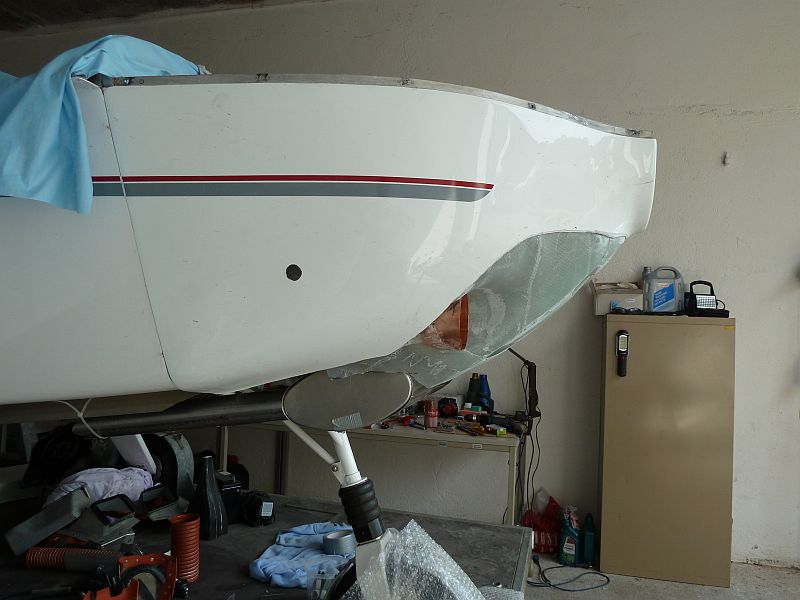
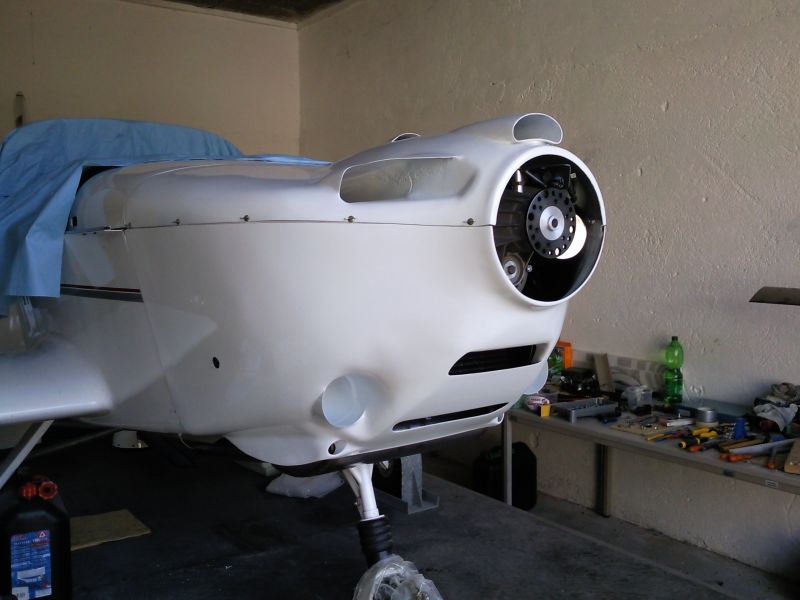
The fwd upper inlet is for the air filter, the middle inlet for the upper cylinder cooling and
below the spinner-level are combined inlets for the oil cooler and for the lower cylinder cooling.


Cowling, inside of the upper part


From above


Upper engine cooling duct


Inside the cowling (click on picture for a detailed description) 

Later on, when I practiced some extended engine runs @ higher rpm, my above mentioned
cooling for the lower side of the cylinders (no ducts to guide the air streams) proofed to be insufficient.


I needed to design cooling ducts underneath the cylinders as well. As recommended by
Wilfried Bleidiesel , I also installed a slightly larger oil radiator.


Additionally, I installed an air intake right in front of the two NACA ducts in order to
get some cool air to the oil sump, equipped with cooling ribs.

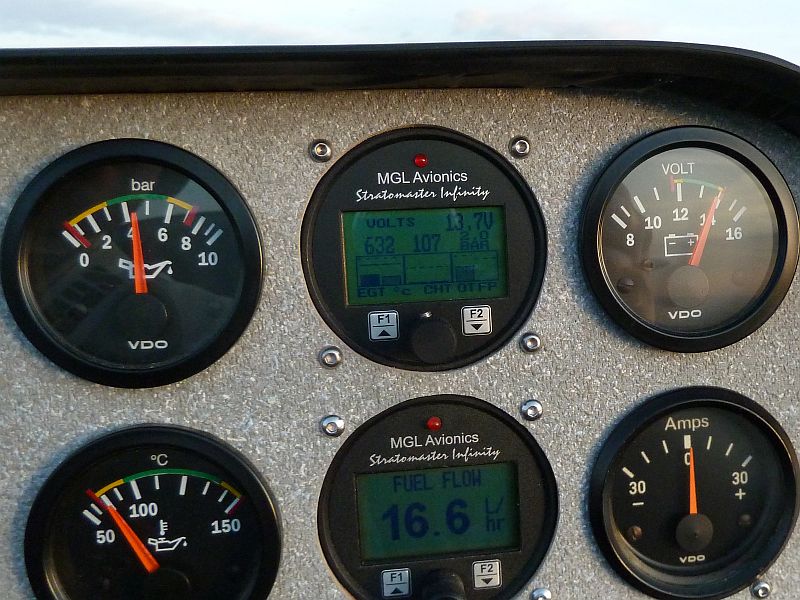
I am very satisfied with the results. During a 30 minute taxiing trial (OAT = 25°C) the oil temperature did not exceed 102°C.

These are the results of a 50 minute engine run OAT = 25°C, min. prop pitch):


    rpm                                             time                                              oil temperature            
3500 1/Min                                   15 Min                                           98 °C
3500 1/Min                                   20 Min                                         102 °C
3500 1/Min                                   25 Min                                         102 °C
6200 1/Min                                   27 Min                                         110 °C
6200 1/Min                                   30 Min                                         120 °C
6200 1/Min                                   23 Min                                         123 °C
6200 1/Min                                   25 Min                                         126 °C
6200 1/Min (for 15 Min.)            40 Min                                         128 °C
3250 1/Min  Cooling run              42 Min                                         123 °C
3250 1/Min                                   43 Min                                         118 °C
3250 1/Min                                   45 Min                                         109 °C
3250 1/Min                                   50 Min                                         103 °C

After solving this problem I will continue ground testing my Cherry ...


Gear

Andreas form Switzerland told me the centrifugal clutch in his BMW-Breezer broke several times (vibration problem).
After all the trouble he replaced the BMW by a Rotax engine.
This was bad news for me, because I purchased this engine-gear drive (centrifugal clutch, vibration dampener...) from
the same manufacturer. It sounds bad, but I can actually learn from this bad experience before getting airborne with my
own plane.
I am not going to replace the engine since the price tag of a Rotax is about the value (parts only - w/o Avionics) of my
complete plane including the engine and there are many satisfied BMW-flyers around the globe.

Let's analyze this...


This is a picture of the defective clutch. There are 6 moving parts (2 massive steel-pieces with pads and 4 springs) prone to failure and cause for severe vibration. I bought this to save a few hundred $ without knowing these details. 
All satisfied BMW-flyers I know are customers of Wilfried Bleidiesel (www.takeoff-ul.de). I recently purchased a clutch with a one piece disc from Wilfried. This clutch is proven, not as heavy as the other brand and it reaches the endurance of the gear.

Now, I am looking forward to further testing my Cherry.


Experience


1. Oil-level gauge

One superb detail on the BMW engine is the oil check just locking trough a glass even from outside the cowling. I was told by some fellows, that this glass (pressed into the engine like an oil seal ring) was lost several times on bikes and even on engines used in planes.

I need a solution for this problem before this happens to me as well.

BMW learned from experience and secured the glass on the new GS1200 engine with a snap-ring!!!


     schauglas

Well there is no space for a snap-ring on the R1100S                    Here is a simple solution form Berry Schoenmakers
engine, so I build a Teflon-ring to fit with a bracket.


Remark:
Never exceed red marker for the oil level - it causes (at least) a significant loss of power!


2. Exhaust manifold

Wilfried Bleidiesel did recommend the use of flexible couplings for the manifold.


My rigid construction lead to failure of the M 6 bolts of the manifold flanges (middle).

Looking at this picture... leaving the black cover for the generator belt drive off, leads to an early failure of the belt du to excessive heat from the exhaust pipes.


Meanwhile I did insert a piece of flexible exhaust tubing on both sides of the Y-shaped manifold
and replaced the heat protection fabric (sheet), it got brittle and disintegrated, by aluminum heat-shields.


 3. Manifold Pressure gauge

Experienced pilots recommended the installation of a manifold pressure gauge in order to optimize the usage of the constant
speed propeller. Well. I did so, but my BMW engine creates only 5-6 inches hg at idle and starting at 2000 rpm up to 7500 rpm, there is almost ambient air pressure within the manifold. A good engine performance, but as for the manifold pressure gauge - that’s it... Nevertheless, as a technician, I am able to fine-tune the propeller-setting using the tachometer  and my ears...


4. Silencer

I experienced an increased noise level (muffler) on the way back home from the 5th Cherry-meeting in 2008.


A hole, burned trough the outer wall (aluminum) of the silencer as I discovered after the landing (80 flight hours in the log).


The heat-protection-shield performed well. Though, I need a better solution.


New silencer made of titanium (Honda Fireblade - Ebay 36 €)


To be continued...


     Obtain a Cherry-Builder-File with a License at www.bx-2.de


                                                                       Top of page